10 Signs Your Geyser Is About to Fail
20 June 2026
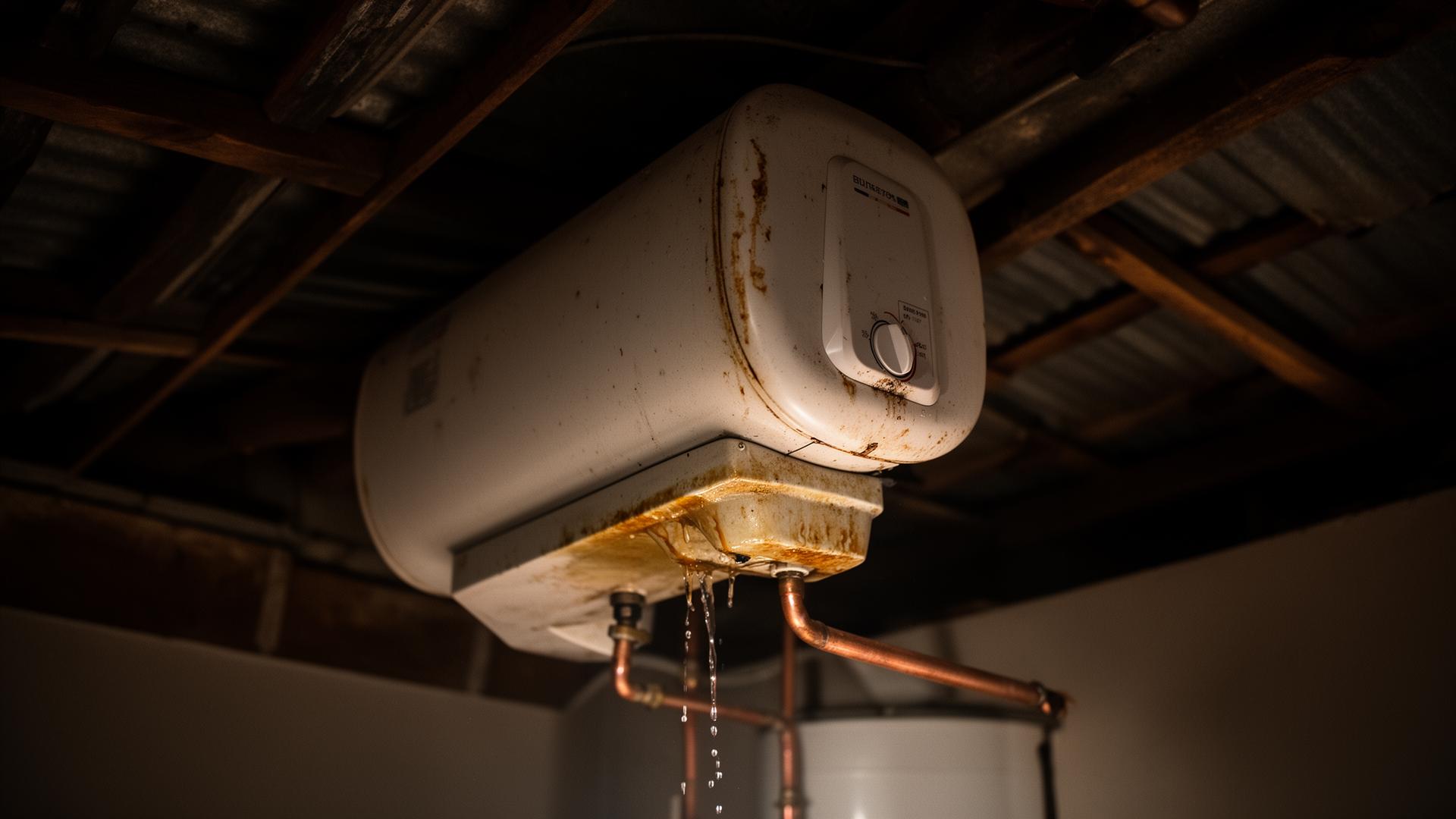
Your geyser works quietly in the background every day — heating water for showers, dishes, and laundry without asking for much in return. But like every mechanical and electrical appliance, it has a lifespan. And unlike a lightbulb that simply stops working, a failing geyser rarely fails silently. It sends warning signals weeks or even months before it gives out completely.
The problem is that most South African homeowners don't know what those signals look like. The result? A geyser that fails without warning, flooding a ceiling, leaving a family without hot water, and generating a repair bill that could have been significantly reduced — or avoided entirely — with early intervention.
This guide covers the 10 most important warning signs that your geyser is approaching failure, what each sign means technically, and exactly what to do about it.
Why Geyser Failure Is So Costly in South Africa
A standard residential geyser in South Africa — a 150-litre unit, the most common size for a family of four — costs between R4,500 and R10,000 to supply and install, depending on brand, specification, and location. Add the cost of a licensed PIRB-registered plumber to complete the installation and issue the legally required Certificate of Compliance (CoC), and a full replacement typically runs between R7,000 and R18,000.
But that is only the cost when a geyser is replaced proactively. When a geyser fails catastrophically — bursting a tank, flooding a ceiling, or failing after hours on a public holiday — the cost escalates dramatically:
- Emergency plumber call-out fees (after hours)
- Ceiling board replacement and repainting
- Possible structural damage to ceiling joists and wall cavities
- Mould remediation if water sat for any period before discovery
- Loss of hot water for multiple days while parts and replacement units are sourced
- Insurance excess payments, delays, and the admin burden of a claim
The average South African household that catches geyser problems early saves between R5,000 and R25,000 compared to one that waits for a catastrophic failure. Knowing the warning signs is genuinely valuable — not just convenient.
The 10 Warning Signs Your Geyser Is About to Fail
Sign 1: Your Geyser Is More Than 10 Years Old
What it means:
This is not a dramatic symptom — it is simply a fact of physics and materials. Standard residential geysers in South Africa are designed for a lifespan of approximately 8 to 12 years under normal operating conditions. After this point, the internal components — the anode rod, the glass lining, the element, the thermostat, and the temperature and pressure relief (T&P) valve — have all experienced significant wear.
The anode rod deserves specific attention. This is a sacrificial magnesium or aluminium rod suspended inside the geyser tank, specifically designed to corrode preferentially in order to protect the steel tank body from rust. Over time, the anode rod is consumed. Once it is fully depleted, the tank steel itself begins to corrode — and a corroding geyser tank cannot be repaired. Replacement is the only option.
Why it matters:
A geyser older than 10 years that has not been recently serviced is operating with unknown internal condition. The anode rod may be depleted. The element may be scaled. The thermostat may be drifting. Any of these conditions can lead to premature and often sudden failure.
What to do:
If your geyser is more than 10 years old, schedule a professional service inspection immediately. A PIRB-registered plumber can check the anode rod, test the element and thermostat, inspect the T&P valve and pressure-limiting valve (PLV), and advise whether the unit is worth maintaining or whether proactive replacement is the better long-term investment.
Sign 2: Rusty or Discoloured Hot Water
What it means:
When you open a hot water tap and the water runs orange, brown, red-tinged, or murky — particularly when cold water from the same tap runs clear — this is a strong indicator that the inside of your geyser tank is corroding.
Rust in hot water indicates one of two things:
- The anode rod is depleted and the steel tank body is actively corroding, releasing iron oxide particles into the water
- The geyser's internal glass or enamel lining has cracked or degraded, exposing the steel substrate to direct water contact
In either case, once a geyser tank is actively corroding internally, the tank itself is compromised. Corrosion weakens the steel, thins the tank walls, and creates conditions for pinhole leaks and eventual tank rupture.
Important distinction:
Rusty water from hot taps can also be caused by old galvanised steel pipes in the home rather than the geyser itself. To distinguish between the two: run the hot tap for two to three minutes. If the rust clears quickly, the source is likely the pipes. If the rust persists — particularly first thing in the morning after the water has been sitting in the geyser overnight — the source is the geyser tank.
What to do:
Do not ignore rusty hot water. Call a licensed plumber for an urgent inspection. If the tank is confirmed to be corroding, replacement is the only appropriate response. A corroded geyser tank has no safe or practical repair option.
Sign 3: Water Pooling Around the Base of the Geyser, or a Constantly Wet Drip Tray
What it means:
A small amount of water in the drip tray below a geyser — particularly when the geyser has recently completed a heating cycle — is normal. The pressure-limiting valve (PLV) and the temperature and pressure relief (T&P) valve both discharge small amounts of water during normal operation as pressure is released.
However, if the drip tray is constantly wet, if water is pooling on the floor around the geyser, or if you can see moisture on the outside of the tank itself, this is not normal — and it is a warning sign that demands immediate professional attention.
Possible causes:
- A weeping or failing T&P valve: The T&P valve is a critical safety device that releases water when the temperature or pressure inside the tank exceeds safe limits. Constant weeping from the T&P valve suggests the tank pressure or temperature is chronically too high — a dangerous condition that can lead to catastrophic failure.
- A failed or leaking PLV: The pressure-limiting valve on the cold water inlet may be passing water, particularly if incoming municipal pressure is excessive.
- A pinhole leak in the tank body: Early-stage tank corrosion can create pinhole leaks — tiny breaches in the tank wall through which water seeps slowly. These are frequently the first sign of a tank that is near end of life.
- A loose or degraded inlet or outlet connection: Water may be seeping from the connection points rather than the tank itself.
What to do:
Call a licensed plumber immediately. Do not ignore standing water around or under your geyser. What appears to be a minor drip can be the first visible symptom of a tank under dangerous pressure or a tank wall approaching failure.
Sign 4: Inconsistent Water Temperature — Hot, Then Cold, Then Scalding
What it means:
If your shower alternates between comfortably hot water, an unexpected cold burst, and then water that is scalding hot — and this is a new or worsening pattern rather than a deliberate shower setting — your geyser's thermostat is likely failing.
The thermostat is the component responsible for maintaining the water in the geyser at a consistent, safe temperature — typically 55°C to 65°C. A failing thermostat loses the ability to accurately read the water temperature and regulate the element accordingly. This results in:
- Water that never fully heats to the set temperature (the thermostat cuts the element off too early)
- Water that overheats significantly above the set temperature (the thermostat fails to cut the element off)
- Erratic cycling — the element switching on and off unpredictably, producing inconsistent temperatures at the tap
Why this is dangerous:
A thermostat that allows the geyser to overheat significantly above its design temperature is not just an inconvenience — it is a genuine safety hazard. Water heated above 70°C can cause severe scalding injuries in seconds, particularly dangerous for young children and the elderly. Additionally, sustained overheating places extreme stress on the T&P valve and on the tank itself, accelerating wear and increasing the risk of catastrophic failure.
What to do:
Do not attempt to replace a geyser thermostat yourself. This is an electrical repair inside a high-voltage, high-pressure appliance and must be carried out by a PIRB-registered plumber or licensed electrician with plumbing certification. A thermostat replacement is relatively inexpensive and straightforward — but only when done correctly.
Sign 5: Reduced Hot Water Capacity or Running Out of Hot Water Faster Than Usual
What it means:
If your 150-litre geyser used to comfortably supply two showers, a dishwasher cycle, and hand-washing without running cold — and now it struggles to provide enough hot water for a single shower — something inside the geyser has changed.
The most common technical cause is element scaling. In areas with hard water — which includes much of Gauteng — calcium carbonate and magnesium scale slowly deposits on the heating element, forming an insulating crust. A scaled element transfers heat far less efficiently to the surrounding water, meaning the geyser must run longer to reach temperature, and the available hot water is reduced because much of the tank's volume is being heated less effectively.
A second possible cause is a failing dip tube. The dip tube delivers incoming cold water to the bottom of the tank, allowing hot water to be drawn from the top. If the dip tube cracks, breaks, or becomes dislodged, cold water mixes directly with hot water at the top of the tank, drastically reducing the volume of usable hot water reaching the tap.
What to do:
Schedule a service inspection. An element descaling or replacement is a routine, cost-effective repair. A dip tube replacement is also straightforward. Both interventions restore full hot water capacity and reduce electricity consumption.
Sign 6: Unusually High Electricity Bills Without a Lifestyle Change
What it means:
The geyser is typically the single largest electricity consumer in a South African home — accounting for 30% to 40% of the household's total electricity bill in many cases. When a geyser is operating efficiently, this cost is predictable and proportional to hot water usage.
If your electricity bill has increased substantially without a corresponding change in your lifestyle, hot water usage, or seasonal weather, your geyser may be the cause.
Possible technical causes:
- Element scaling (as described in Sign 5) — a scaled element requires significantly more electricity to deliver the same volume of hot water
- A failing thermostat that allows overheating — the element runs more frequently and for longer than necessary
- Damaged or degraded geyser insulation — heat is lost from the tank more quickly, requiring more frequent reheating
- A small, undetected hot water leak somewhere in the plumbing — the geyser is constantly heating water that is being lost
- An incorrectly set or stuck-on thermostat — the element is running continuously
What to do:
Compare your electricity bills over the past six to twelve months. If the increase is significant and unexplained, request a geyser service inspection. The cost of the inspection is typically recovered within one to three months of corrected electricity consumption.
Sign 7: Popping, Rumbling, or Banging Noises from the Geyser
What it means:
A healthy geyser is essentially silent in operation. You may hear a faint hum from the element during a heating cycle, but nothing more. If you can hear popping, rumbling, banging, or kettle-like boiling sounds coming from your geyser — particularly during or shortly after a heating cycle — this is a warning sign.
The most common cause is sediment and limescale build-up at the bottom of the tank. Over time, dissolved minerals in the water settle out and accumulate on the tank floor. When the element heats, water trapped beneath this sediment layer rapidly boils and bubbles up through the deposit, producing the popping and rumbling sounds. In severe cases, the sediment forms a thick, hard layer that traps so much water beneath it that the resulting boil produces banging noises loud enough to be heard from another room.
Why this matters:
Sediment build-up:
- Reduces the effective volume of the tank (less hot water available)
- Insulates the element from the water (reduced efficiency, higher electricity cost)
- Causes localised overheating of the tank floor (accelerated tank corrosion and element failure)
- Can damage the element through thermal stress
What to do:
A professional geyser flush — draining and rinsing the tank to remove sediment — is a routine and relatively inexpensive service. If noises have been present for some time, the sediment layer may also be coating the element, in which case an element replacement may be required alongside the flush.
Sign 8: The T&P (Temperature and Pressure Relief) Valve Is Constantly Discharging
What it means:
The temperature and pressure relief valve — usually mounted on top of the geyser with a copper discharge pipe running to the drip tray — is a safety device. It is designed to release water when the temperature or pressure inside the tank exceeds safe limits, preventing the tank from rupturing under extreme conditions.
A small amount of intermittent discharge during normal heating cycles is acceptable. However, if the T&P valve is constantly discharging, dripping, or releasing significant volumes of water, this is a serious warning sign and must not be ignored.
Possible causes:
- Tank pressure is chronically too high — typically caused by a failed pressure-limiting valve (PLV) on the cold water inlet
- Tank temperature is too high — typically caused by a failing thermostat allowing the element to overheat the water
- The T&P valve itself has failed — the seat has degraded or the spring has weakened, allowing it to weep continuously
Why this is urgent:
A constantly discharging T&P valve indicates that the geyser is operating outside safe parameters. The valve is doing its job — preventing rupture — but the underlying condition causing the discharge must be diagnosed and corrected. Additionally, if the T&P valve itself eventually fails completely while the underlying pressure or temperature problem remains, the geyser could rupture catastrophically.
What to do:
Call a PIRB-registered plumber immediately. This is not a wait-and-see situation — it requires same-day attention. Do not attempt to "fix" a constantly discharging T&P valve by tightening, capping, or replacing only the valve. The underlying cause must be identified and corrected.
Sign 9: Visible Rust, Corrosion, or Swelling on the Outside of the Tank
What it means:
Inspect the visible outside surface of your geyser tank — both the body and the connection points where pipes enter and exit. Look for:
- Rust spots on the metal casing, particularly around the bottom of the tank
- White, chalky deposits around fittings (mineral residue from very small leaks that have evaporated)
- Brown or green staining running down the tank from any fitting
- Visible swelling, bulging, or deformation of the tank — particularly at the bottom
External rust and staining are often the visible signs of an internal corrosion process that has progressed far enough to begin affecting the tank exterior. Swelling or bulging — though rare — is an extremely serious sign that the tank wall has weakened to the point of beginning to deform under internal pressure.
What to do:
Photograph what you can see and call a plumber for inspection. Minor external corrosion may not require immediate replacement, but any evidence of tank wall deformation or persistent water weeping from the tank body itself is grounds for urgent replacement.
Sign 10: The Geyser Takes Much Longer to Recover After Hot Water Is Used
What it means:
After a shower, bath, or other significant draw of hot water, your geyser should reheat and restore the tank to full temperature within a predictable, consistent period. For a standard 4kW element heating a 150-litre tank, full recovery from a partial draw (approximately 40 litres used) should take around 45 to 60 minutes under normal conditions.
If you are noticing that the recovery time has extended significantly — that the water is still noticeably cooler than usual even two to three hours after the last draw — the element is losing efficiency. This is often the first functional sign of element scaling, and it typically precedes the "running out of hot water faster" complaint by several months.
Extended recovery time is also associated with a thermostat that is failing to activate the element promptly after a hot water draw — a different failure mode but with the same observable symptom at the tap.
Why early detection matters here:
A geyser with an extended recovery time is drawing more electricity per litre of hot water produced — you are paying more for less hot water. Catching and addressing this early (with an element replacement or thermostat calibration) is dramatically cheaper than waiting for complete failure.
What to do:
Time your geyser's recovery period deliberately. If it is taking substantially longer than expected for your tank size and element rating — or if recovery time has visibly worsened over the past six to twelve months — schedule a professional service and element test.
Summary: The 10 Warning Signs at a Glance
| # | Warning Sign | Likely Cause | Urgency |
|---|---|---|---|
| 1 | Geyser is over 10 years old | Age-related wear across all components | Medium — service immediately |
| 2 | Rusty or discoloured hot water | Corroding tank or depleted anode rod | High — inspect urgently |
| 3 | Water pooling / constantly wet drip tray | T&P valve, PLV failure, or pinhole tank leak | High — call plumber now |
| 4 | Inconsistent or scalding water temperature | Failing thermostat | High — safety risk |
| 5 | Running out of hot water faster than usual | Scaled or failing element | Medium — schedule service |
| 6 | Unusually high electricity bills | Scaled element, poor insulation | Medium — schedule service |
| 7 | Popping, rumbling, or banging noises | Sediment and limescale build-up | Medium — inspect soon |
| 8 | T&P valve constantly discharging | Overheating, excess pressure, or failed valve | Very High — call immediately |
| 9 | Visible rust, corrosion, or tank swelling | External or internal corrosion | High — urgent inspection |
| 10 | Very slow hot water recovery | Failing element or thermostat | Medium — schedule service |
What to Do When You Spot a Warning Sign
If you see Signs 3, 4, 8, or 9 — act immediately:
These signs indicate conditions that may be dangerous and that can escalate to catastrophic failure or injury with little additional warning. Switch off the electricity supply to the geyser at your DB board, close the cold water inlet isolation valve, and call a PIRB-registered plumber the same day.
If you see Signs 1, 2, 5, 6, 7, or 10 — schedule a professional service within weeks:
These signs indicate a geyser that is declining in performance or approaching end of life. They are not immediately dangerous but will worsen. Scheduling a professional service now is significantly cheaper than waiting for the situation to become an emergency.
Should You Repair or Replace a Failing Geyser?
This is the question every homeowner faces when a geyser begins showing warning signs. The decision depends on several factors:
| Geyser Age | Recommended Action |
|---|---|
| Under 5 years | Repair — element, thermostat, or valve replacement is cost-effective |
| 5–8 years | Assess — repair if the fault is isolated; replace if multiple faults are present |
| 8–12 years | Consider proactive replacement, especially if any tank corrosion is present |
| Over 12 years | Replace — the cost of ongoing repairs in an aged unit rarely justifies the risk |
Also consider upgrading at replacement time:
- Heat pump geysers: Use ambient air heat instead of direct electrical resistance. Can reduce water-heating electricity costs by up to 75%. Higher upfront cost but significant long-term savings.
- Solar water heaters: Use solar thermal energy to heat water, with an electrical backup element for cloudy days. Excellent long-term investment for South Africa's climate.
- Larger tank size: If running out of hot water has been a recurring complaint, consider upsizing to a 200-litre unit at replacement time.
The Legal Requirements for Geyser Installation and Repair in South Africa
Under the National Building Regulations and the National Building Standards Act, all geyser installations and repairs in South Africa must be carried out by a PIRB-registered plumber. Upon completion, the plumber must issue a Certificate of Compliance (CoC) — a legal document certifying that the installation meets all applicable national standards for pressure, temperature control, safety valving, and pipe connections.
Without a valid CoC:
- Your home insurance policy may refuse any claim related to the geyser
- The installation is technically illegal under South African law
- Any consequential damage caused by an uncertified installation is not covered by your insurer
Always request and retain the CoC for any geyser installation or significant repair. Keep it with your home insurance documents for easy access when needed.
Geyser Repair and Replacement Costs in South Africa
| Service | Typical Cost Range |
|---|---|
| Geyser service and inspection | R800 – R2,000 |
| Element replacement (standard) | R1,200 – R3,000 |
| Thermostat replacement | R600 – R1,800 |
| T&P valve replacement | R400 – R1,200 |
| Anode rod replacement | R500 – R1,500 |
| Pressure-limiting valve (PLV) replacement | R800 – R2,500 |
| Full geyser replacement (150L unit, installed) | R7,000 – R14,000 |
| Full geyser replacement (200L unit, installed) | R9,000 – R18,000 |
| Heat pump geyser (installed) | R18,000 – R35,000 |
| Solar water heater (installed) | R15,000 – R45,000+ |
Prices are indicative and vary by area, brand, and plumber. Always request a written, itemised quote.
Need a Plumber in Johannesburg to Inspect Your Geyser?
If your geyser is showing any of the warning signs above — or if it is more than 8 years old and has not been professionally serviced — do not wait for a catastrophic failure. Joburg Plumbers connects you with verified, PIRB-registered plumbers across all areas of Johannesburg, including Sandton, Randburg, Roodepoort, Midrand, Fourways, Soweto, Boksburg, Germiston, Kempton Park, and across the East Rand, West Rand, Joburg North, and Joburg South regions.
A geyser inspection costs a fraction of an emergency replacement — and catching problems early is always the smarter investment.
This article is intended as general guidance only. Always use a PIRB-registered plumber for geyser inspections, repairs, and replacements in South Africa.