Hard Water Problems in Johannesburg Explained
25 June 2026
If you have ever noticed white crusty deposits building up around your taps, a filmy residue on your shower glass, soap that refuses to lather properly, or a geyser element that fails prematurely — you have experienced the effects of hard water. Johannesburg has moderately hard water, and for most homeowners in Gauteng the daily impact is real, cumulative, and often expensive if left unaddressed.
This guide explains what hard water is, why Johannesburg has it, exactly what it does to your plumbing and appliances, and what you can do about it.
What Is Hard Water — and Why Does Johannesburg Have It?
Water hardness refers to the concentration of dissolved minerals — primarily calcium (Ca²⁺) and magnesium (Mg²⁺) ions — in a water supply. These minerals are measured in milligrams per litre (mg/L) or parts per million (ppm), and also commonly expressed as milligrams of calcium carbonate equivalent per litre (mg/L CaCO₃).
Water hardness is classified as follows:
| Classification | Calcium Carbonate Level |
|---|---|
| Soft | 0–60 mg/L CaCO₃ |
| Moderately hard | 61–120 mg/L CaCO₃ |
| Hard | 121–180 mg/L CaCO₃ |
| Very hard | Above 180 mg/L CaCO₃ |
Johannesburg's water source: The City of Johannesburg is supplied primarily by Rand Water, one of the largest water utilities in the world. Rand Water draws its raw water from the Vaal Dam and the Vaal River system, treats it at its Zuikerbosch and Vereeniging treatment plants, and supplies it across Johannesburg, the East Rand, West Rand, and parts of surrounding municipalities.
The Vaal Dam catchment area flows over dolomitic and carbonate-rich geological formations. As rainwater percolates through these rock layers, it dissolves calcium and magnesium compounds and carries them into the river system. After treatment, Johannesburg's municipal water supply typically registers at approximately 100–140 mg/L CaCO₃ — placing it in the moderately hard to hard range.
This level of hardness is not a health risk — in fact, calcium and magnesium are essential minerals that have health benefits when consumed. The problem is entirely with what that mineral content does to your pipes, appliances, surfaces, and plumbing fixtures over time.
What Hard Water Does to Your Home — 7 Specific Problems
Problem 1: Limescale Build-Up on Taps, Showerheads, and Fixtures
The most visible symptom of hard water is limescale — the white, chalky, or off-white mineral deposit that accumulates wherever water evaporates and leaves its dissolved minerals behind. In a Johannesburg home, limescale is the inevitable result of the calcium carbonate in municipal water precipitating out when water is heated or evaporates from surfaces.
Limescale forms on:
- Tap outlets, aerators, and internal washer seats
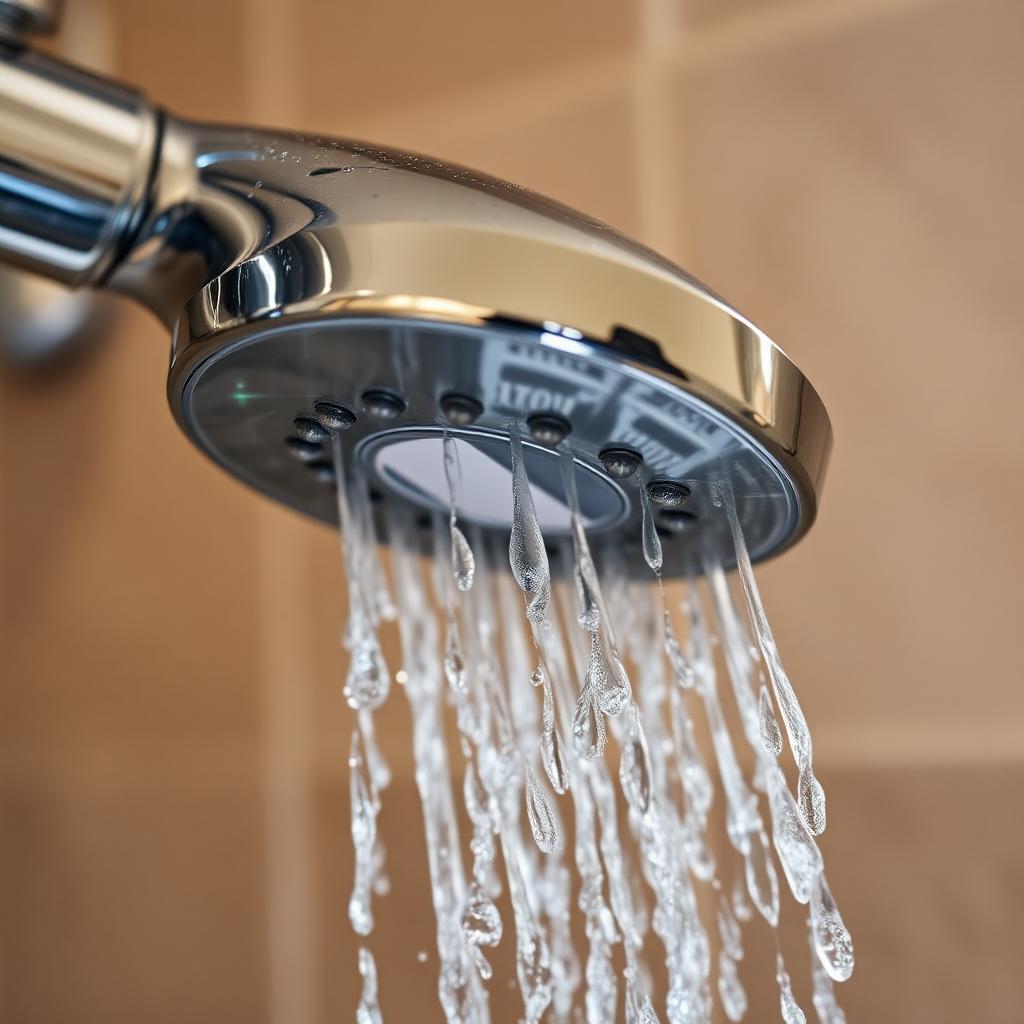
- Showerheads and shower screens
- Basin and bath surfaces below tap outlets
- Toilet bowl waterlines and under the rim jets
- Kettle elements and the inside of coffee machines
Left untreated, limescale progressively blocks tap aerators (reducing water flow), blocks showerhead jets (creating uneven spray), and builds up inside toilet rim jets to the point where flushing becomes ineffective. Heavy limescale on tap seats also prevents rubber washers from sealing properly, causing persistent dripping.
Solution: Regular descaling with white vinegar or citric acid solution removes limescale safely from fixtures. For tap aerators: unscrew, soak in undiluted white vinegar for 30–60 minutes, rinse, and refit. For showerheads: fill a plastic bag with white vinegar, rubber-band it around the showerhead so the jets are submerged, leave overnight, then run water through. For toilet rim jets: pour citric acid solution into the overflow tube inside the cistern and leave for several hours.
Problem 2: Geyser Element Scaling — The Biggest Hidden Cost
This is the most financially significant impact of hard water for most Johannesburg homeowners, and it is invisible until something fails.
When water is heated inside your geyser, the solubility of calcium carbonate decreases — meaning minerals that were dissolved at cold temperatures precipitate out and deposit directly onto the heating element as a hard white scale layer. The harder and more rapidly water is heated, the more scale deposits form.
What element scaling does:
- Reduces heating efficiency dramatically. Scale is an excellent thermal insulator. A scale layer of just 3mm on a geyser element can reduce its heating efficiency by 20–30%. A heavily scaled element (which is common in older Joburg geysers) may use 50–100% more electricity to achieve the same water temperature as a clean element.
- Increases electricity costs. Because the element must run for longer heating cycles to achieve the set temperature, your monthly electricity bill increases measurably — without any increase in how much hot water you use.
- Causes element failure. A heavily scaled element eventually overheats in its own scale coating, causing premature element burnout. This is the leading cause of geyser element failure in Johannesburg — not age or electrical fault.
- Accelerates tank corrosion. Sediment and scale that collects on the floor of the geyser tank traps water against the steel, accelerating internal corrosion.
What the scale sounds like: If your geyser makes loud popping, cracking, or rumbling sounds during heating cycles, this is almost certainly limescale and sediment on the element — steam bubbles bursting through the scale layer.
Solution: Annual professional geyser servicing by a PIRB-registered plumber includes element inspection and replacement when necessary. For homes with particularly hard water, installing a whole-house water softener or a scale inhibitor on the geyser cold water inlet reduces scale formation significantly. A scale inhibitor (polyphosphate dosing unit or template-assisted crystallisation device) costs R800–R3,500 installed and can extend geyser element life by several years.
Problem 3: Blocked or Inefficient Appliances
Any appliance that heats water — washing machines, dishwashers, kettles, coffee machines, and steam irons — accumulates limescale on its heating elements over time. The effects are identical to geyser element scaling: reduced efficiency, higher electricity consumption, and eventually premature element failure.
In Johannesburg specifically:
- Washing machines in hard water areas use more detergent to achieve effective cleaning, because calcium ions in the water react with soap to form calcium stearate (soap scum) rather than lather. Most detergent manufacturers' recommended doses assume moderately soft water — in hard water, more detergent is required to overcome the mineral content before the cleaning agents can work.
- Dishwashers develop white filming on glasses and crockery from dissolved calcium deposits.
- Kettles develop significant scale build-up within 3–6 months without regular descaling maintenance.
Solution: Descale kettles and coffee machines monthly using citric acid or white vinegar solution. Use a dishwasher salt to regenerate the dishwasher's built-in ion exchange resin (most South African dishwasher owners are unaware their machine has this system). Use a washing machine descaler product every 3–6 months. Consider a whole-house water softener if multiple appliances are showing scaling issues simultaneously.
Problem 4: Soap Scum, Poor Lathering, and Skin and Hair Effects
Hard water interferes directly with the cleaning process. Calcium and magnesium ions react with the fatty acid salts in soap and shampoo to form calcium stearate — an insoluble white compound that does not rinse away cleanly. This is what soap scum is, and it is the reason why Johannesburg residents often feel that they need to use more soap or shampoo than feels proportionate to get a satisfactory result.
The visible effects in your bathroom:
- White filmy residue on shower glass and tiles that reappears within days of cleaning
- Soap scum ring in the bath and on bath surfaces
- A feeling that hair is never quite clean or that skin feels tight and dry after showering
On hair specifically, the calcium and magnesium ions can bond to hair proteins and to hair care product residues, leaving a mineral film that makes hair feel heavy, dull, or difficult to manage. This effect is more pronounced with finer hair.
Solutions:
- Shower filters: Inline shower filters containing ion exchange resin or KDF media can reduce hardness specifically at the shower outlet. These are relatively inexpensive (R300–R1,500) and can make a noticeable difference to hair and skin.
- Chelating shampoos and clarifying products: These are formulated to bind and remove mineral deposits from hair specifically. Useful for managing hard water hair effects without plumbing changes.
- White vinegar rinse: A diluted white vinegar rinse after shampooing dissolves calcium deposits from the hair shaft. Effective but not everyone's preference.
- Whole-house water softener: Addresses the problem at source for the entire household.
Problem 5: Staining on Toilet Bowls, Basins, and Tile Grout
The characteristic brown or orange-tinted staining in toilet bowls around the waterline, or the yellowish-brown staining that develops in basins and on tile grout in Johannesburg homes, is not rust from your pipes — in most cases, it is a combination of calcium and manganese deposits reacting with chlorine in treated municipal water and oxidising over time.
Rand Water's source water from the Vaal system contains trace manganese — a naturally occurring metal that is present in many South African water sources. At the concentrations found in Johannesburg's municipal supply, manganese is not a health concern, but it is the primary cause of the brown-toned staining that Johannesburg homeowners find so persistent.
Why standard toilet cleaners don't fully work: Most commercial toilet bowl cleaners are surfactant-based and do not dissolve mineral and manganese deposits effectively. Using them on mineral staining gives a temporary improvement but the staining returns quickly.
Solution:
- Citric acid: The most effective DIY descaler for mineral staining. Dissolve 3–4 tablespoons in half a litre of warm water, apply to the stained area, leave for 30–60 minutes, scrub with a soft toilet brush. For stubborn staining, repeat treatments over several sessions.
- White vinegar: Soak paper towels in undiluted white vinegar and press against stained basin or toilet surfaces. Leave for 1–2 hours.
- Pumice stone: A wet pumice stone removes mineral deposits from toilet porcelain without scratching the glaze — but must be kept wet throughout use.
- Never use abrasive scouring powders or steel wool — these permanently scratch the porcelain glaze, making the surface more prone to future staining.
Problem 6: Reduced Lifespan of Plumbing Fixtures and Valves
Hard water doesn't just affect visible surfaces — it progressively damages the internal components of taps, shower valves, and mixing valves. Ceramic disc tap cartridges — the type used in most modern South African tap and shower fittings — are particularly susceptible to mineral deposit infiltration. Fine calcium particles settle between the ceramic discs, creating abrasive scoring that eventually prevents the cartridge from sealing properly, leading to dripping even in relatively new taps.
Ball valves and gate valves — isolation valves used to control water supply to individual fixtures — can become difficult or impossible to operate if limescale deposits form on the valve seat or stem. A seized isolation valve is a serious problem in a plumbing emergency, when you need to shut off the water supply to a fixture quickly.
Solution: Operate all isolation valves every 6–12 months to prevent them seizing. Replace ceramic cartridges in dripping taps promptly — a scaled cartridge cannot be cleaned effectively and requires replacement. In hard water areas, consider ceramic cartridges from manufacturers with hard-water specific tolerances.
Problem 7: Water Pressure Reduction Over Time
In older Johannesburg homes — particularly those with galvanised steel pipes from the 1970s and 1980s — hard water contributes to a gradual reduction in water pressure that typically takes years to develop but can eventually become quite significant.
Galvanised steel pipes corrode from the inside out as a matter of course. Hard water accelerates this process by depositing calcium scale on the interior pipe wall alongside the corrosion products, progressively narrowing the internal diameter of the pipe. This internal narrowing is known as pipe furring or internal scaling, and it is the reason why many older Johannesburg homes have noticeably weaker water pressure than neighbouring homes on newer copper or CPVC pipe systems.
Solution: There is no chemical or maintenance fix for severely furred galvanised steel pipes — replacement is the only long-term solution. A PIRB-registered plumber can assess the condition of your pipes and advise on re-piping with copper or CPVC, which are both resistant to the internal scaling that galvanised steel suffers.
The Solutions at a Glance: Managing Hard Water in Your Johannesburg Home
Option 1: Whole-House Water Softener
A conventional ion exchange water softener removes calcium and magnesium ions from the entire home's water supply by exchanging them for sodium ions as water passes through a resin tank. The result is genuinely soft water throughout the home — no limescale on any fixture, no scaling in the geyser, no soap scum, and dramatically improved appliance efficiency.
Cost: R8,000–R25,000 installed, depending on capacity and brand. Ongoing cost: Salt (approximately R150–R300 per month depending on household size). Note: Softened water is not recommended for drinking or cooking by some guidelines due to the elevated sodium content — most installations include an unsoftened bypass tap in the kitchen for drinking water.
Option 2: Scale Inhibitor (Geyser Inlet or Whole-House)
A scale inhibitor does not remove hardness minerals from the water but prevents them from precipitating as hard scale on surfaces. Template-assisted crystallisation (TAC) systems and polyphosphate dosing systems are the most common types. These are lower-cost, maintenance-light alternatives to full water softeners.
Cost: R800–R5,000 installed. Best for: Protecting the geyser element and appliances without the salt and maintenance requirements of a full softener.
Option 3: Point-of-Use Treatment
For targeted concerns — a shower filter for hair and skin, or a reverse osmosis (RO) unit under the kitchen sink for drinking water — point-of-use filters address specific hard water impacts without treating the whole house.
Cost: R300–R8,000 depending on the system type.
Option 4: Regular Descaling and Maintenance
For homeowners not ready to invest in a treatment system, a consistent descaling maintenance routine mitigates hard water damage:
- Monthly: Descale kettle and coffee machine; wipe down shower screen with diluted white vinegar
- Every 3 months: Clean tap aerators and showerhead in white vinegar; descale washing machine
- Annually: Professional geyser service and element inspection; check and operate all isolation valves
What a Licensed Plumber Can Do for Hard Water Problems
A PIRB-registered plumber can:
- Inspect and replace geyser elements damaged or scaled by hard water
- Install a scale inhibitor on the geyser cold water inlet or at the main supply
- Install a whole-house water softener with correct sizing for your household
- Replace furred or corroded galvanised steel pipes with copper or CPVC
- Replace seized isolation valves before they fail in an emergency
- Re-seat or replace tap cartridges damaged by scale infiltration
- Issue a Certificate of Compliance (CoC) for any work requiring certification under South African building regulations
Need a Plumber in Johannesburg for Hard Water Problems?
If your geyser is making unusual noises, your water pressure has gradually dropped, your taps are dripping despite new washers, or you want to install a scale inhibitor or water softener — Joburg Plumbers connects you with verified, PIRB-registered plumbers across all areas of Johannesburg, including Sandton, Randburg, Roodepoort, Midrand, Fourways, Soweto, Boksburg, Germiston, Kempton Park, and across the East Rand, West Rand, Joburg North, and Joburg South regions.
Hard water is a Johannesburg reality. Managing it correctly protects your plumbing, your appliances, and your wallet.
This article is intended as general guidance only. Water hardness levels may vary across different areas of Johannesburg depending on supply zone and seasonal variation. Always use a PIRB-registered plumber for geyser work, pipe replacement, and water treatment system installation in South Africa.