Why did your water bill double over night?
21 June 2026
You open your municipal statement and do a double-take. Last month: R450. This month: R1,100. Nothing has changed — same household, same routines, same number of people. So where is all that water going? A sudden spike in your water bill is almost never a billing error. In the vast majority of cases, it means water is being used somewhere on your property that you don't know about — and it is costing you money every single hour until it is found and fixed.
Here are the most common causes of a sudden water bill increase, how to identify which one is affecting your home, and what to do about it.
Step One: Check Your Water Meter First
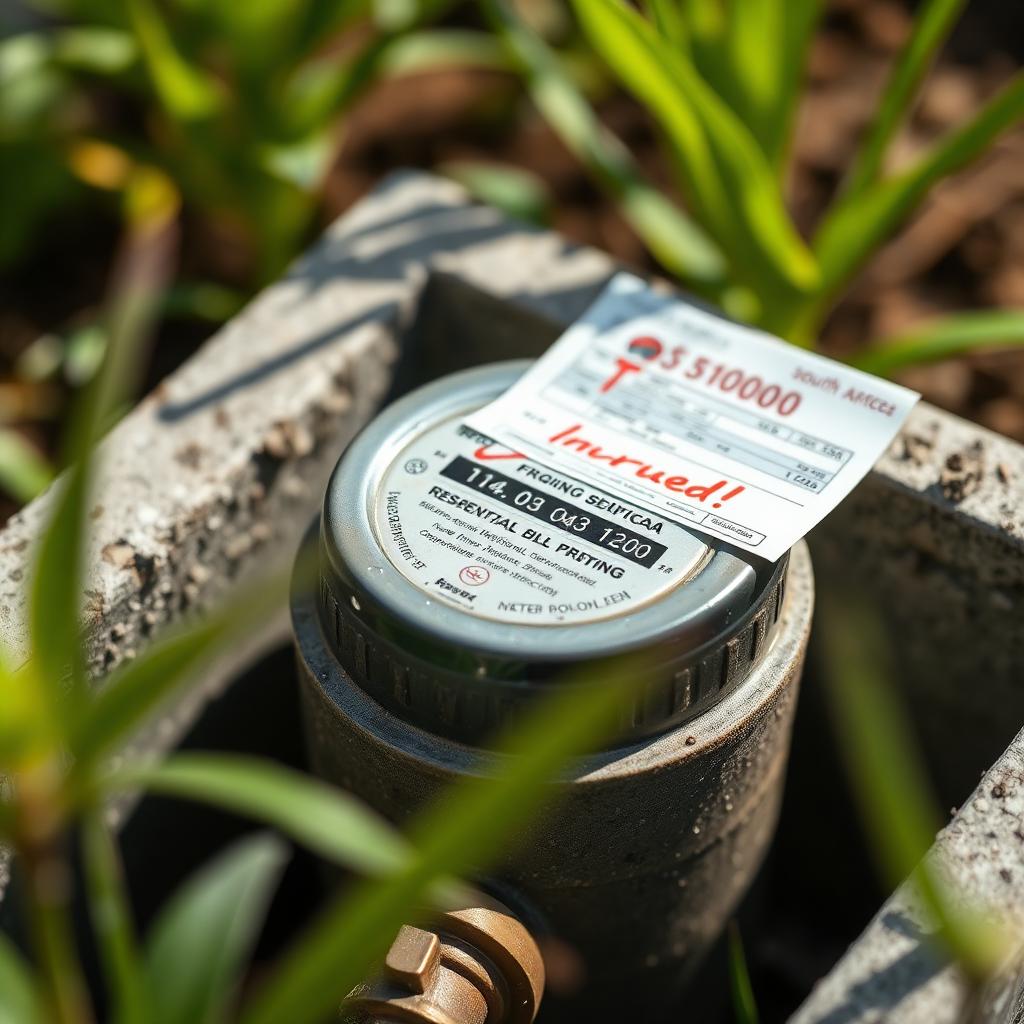
Before calling your municipality or a plumber, spend five minutes at your water meter. This single check tells you almost everything you need to know.
How to do a meter test:
- Switch off every tap, appliance, and water-using device in your home — including the washing machine, dishwasher, irrigation system, and ice maker
- Locate your water meter (usually in a small box near your front boundary wall or garden gate)
- Note the current reading and check whether the dial or the small red indicator triangle is moving
- Wait 15 minutes without using any water, then check again
What the result tells you:
- Dial is moving with all water off — you have a leak somewhere on your property. The faster the dial moves, the larger the leak.
- Dial is still — the usage spike may be related to a billing error, a meter reading issue, or a tariff change. Contact your municipality.
The Most Common Causes of a Sudden Water Bill Spike
1. A Running or Leaking Toilet Cistern
This is the single most common cause of unexplained high water bills in South African homes — and the most frequently overlooked, because the leak is often completely silent.
When a toilet cistern's flapper valve (the rubber seal at the bottom of the cistern) wears out or warps, water continuously trickles from the cistern into the bowl. You may not hear it. You may not see visible overflow. But a slow cistern leak can waste between 200 and 400 litres of water every single day — silently, invisibly, and continuously.
How to test for it: Add a few drops of food colouring into the cistern. Wait 10 minutes without flushing. If colour appears in the bowl, your cistern is leaking into the drain.
The fix: A flapper valve replacement typically costs between R300 and R900 and takes a plumber under an hour. It is one of the cheapest, highest-impact plumbing repairs you can make.
2. An Underground or Hidden Pipe Leak
A burst or leaking pipe inside a wall, under a floor, or underground in the garden can discharge thousands of litres of water with no visible symptom at all — until your water bill arrives.
Underground leaks are particularly common in Johannesburg due to:
- Dolomite-prone soils causing ground movement and pipe stress
- Ageing galvanised steel pipes in older suburbs like Northcliff, Parktown, Melville, and Rosebank
- Tree root intrusion into buried water supply pipes
- Soil erosion after heavy summer thunderstorms disturbing buried pipes
Warning signs of a hidden pipe leak:
- Unusually wet, boggy, or lush patches in the garden with no recent rain
- Damp patches appearing on walls, floors, or ceilings
- A drop in water pressure at your taps
- The sound of running water when all taps are closed
- A moving water meter dial with all fixtures off
The fix: Underground and in-wall leaks require professional leak detection equipment — including acoustic leak detectors and CCTV pipe cameras. Call a PIRB-registered plumber who specialises in leak detection. Once found, the repair cost depends on the access required: an exposed pipe repair costs R800–R2,500; an underground repair typically runs R3,500–R15,000 depending on depth and location.
3. A Leaking or Constantly Running Geyser
Your geyser has a Temperature and Pressure Relief (T&P) valve — a safety device that releases water when the pressure or temperature inside the tank exceeds safe limits. If this valve is constantly weeping or if the associated pressure-limiting valve (PLV) is failing, water is continuously discharging — often through an overflow pipe that exits through an exterior wall or into the roof space drip tray.
Because the discharge typically exits outside the house or into a drip tray in the roof, most homeowners never notice it directly. But the meter does.
Signs your geyser is contributing:
- A continuously wet drip tray in the roof space
- Water dripping from an exterior overflow pipe on the outside wall of the home
- A T&P valve that feels warm or shows moisture around the outlet
The fix: A T&P valve replacement costs R400–R1,200. A PLV replacement costs R800–R2,500. Both must be replaced by a PIRB-registered plumber who will issue a Certificate of Compliance (CoC). Do not ignore a constantly discharging T&P valve — it is also a safety concern, not just a water cost issue.
4. A Dripping or Constantly Running Tap
A tap that drips once per second wastes approximately 31 litres per day — over 900 litres per month from a single tap. A tap that runs continuously even slightly wastes significantly more. Multiple dripping taps across a home compound quickly into a meaningful monthly water volume.
Tap leaks are caused by worn washers, degraded O-rings, or faulty ceramic cartridges. They are among the cheapest plumbing repairs available — typically R300–R800 per tap — but are frequently postponed and forgotten.
The fix: A plumber can replace tap washers, O-rings, or ceramic cartridges quickly. If multiple taps are dripping, address them all at once in a single call-out to minimise costs.
5. An Irrigation or Garden Watering System Fault
Automated irrigation systems are a common and underappreciated source of sudden water bill spikes. A single faulty solenoid valve that fails in the open position can run a garden irrigation zone continuously — 24 hours a day — without anyone noticing, particularly if the system operates on a timer overnight or in the early morning.
Similarly, a cracked or dislodged irrigation pipe underground can leak continuously between scheduled watering cycles without any visible spray at the surface.
Signs of an irrigation fault:
- Soggy patches in the garden not connected to rainfall
- Noticeably higher ground moisture in one zone compared to others
- Audible water flow from the irrigation controller housing when the system should be off
The fix: Check each irrigation zone manually by running it and walking the full area. Look for broken sprinkler heads, cracked pipes, and stuck solenoid valves. A plumber or irrigation specialist can diagnose and repair faulty solenoid valves and underground irrigation leaks.
6. A Municipal Meter Reading or Billing Error
While genuine billing errors are less common than actual leaks, they do occur. Possible billing-related causes of an apparent spike include:
- Estimated readings: If your meter was not read in person last month and the municipality used an estimate that was too low, the correction appears in the following month as a spike
- Meter reading error: A meter reader transcribing the wrong number from your meter
- Tariff tier changes: South Africa's municipal water tariffs are tiered — the more water you use, the higher the rate per kilolitre. If your household crosses into a higher tier due to legitimate usage (hosting guests, a holiday period, filling a pool), the rate increase per kilolitre means the rand amount jumps more steeply than the volume increase alone
- Meter fault: Water meters can occasionally run fast due to mechanical wear, logging more consumption than actually occurred
What to do: Take a photograph of your current meter reading and compare it to the reading shown on your municipal statement. If the figures don't reconcile, contact Johannesburg Water (0860 562 874) to query the account. If your meter may be faulty, request a meter test — municipalities are required to test meters on request, though waiting times can be significant.
A Simple Self-Diagnosis Checklist
Work through this list in order before calling anyone:
☑ Do the meter test — all taps off, watch the dial for 15 minutes. Moving = leak on your property.
☑ Check every toilet — food colouring test in each cistern. Colour in the bowl = leaking flapper.
☑ Check every tap — look and listen for drips, including outdoor taps and laundry taps.
☑ Check your geyser drip tray — wet tray or exterior overflow pipe weeping = geyser valve issue.
☑ Check your garden — walk the full perimeter looking for unusually wet ground, lush patches, or audible running water.
☑ Check your irrigation system — run each zone and walk it. Check the controller for stuck valves.
☑ Check your municipal statement — compare the meter reading on the bill to your actual current meter reading.
☑ Call a licensed plumber if the meter is moving and you cannot find the source — a hidden leak detection service will find it.
What a Hidden Leak Can Cost You Per Month
| Leak Type | Estimated Daily Loss | Estimated Monthly Water Loss | Approximate Monthly Cost* |
|---|---|---|---|
| Dripping tap (1 drip/sec) | 31 litres | ~950 litres (1 kL) | R30–R80 |
| Leaking cistern flapper | 200–400 litres | 6,000–12,000 litres (6–12 kL) | R200–R600 |
| Small underground pipe leak | 500–2,000 litres | 15,000–60,000 litres (15–60 kL) | R500–R3,000+ |
| Stuck irrigation solenoid | 1,000–5,000 litres | 30,000–150,000 litres (30–150 kL) | R1,000–R8,000+ |
| Weeping T&P valve (geyser) | 100–500 litres | 3,000–15,000 litres (3–15 kL) | R100–R750 |
Based on indicative Johannesburg Water residential tariff tiers. Actual cost depends on your consumption band.
Can You Claim a Water Leak Credit from Johannesburg Water?
Yes — in limited circumstances. Johannesburg Water has a leak adjustment policy that allows residential customers to apply for a once-off credit on their water account following a confirmed leak, provided:
- The leak has been repaired and proof of repair is submitted (plumber's invoice and Certificate of Compliance)
- The application is made promptly after the leak is discovered and repaired
- The property is a residential account in good standing
The credit is typically calculated as the average of your previous three to six months' normal consumption subtracted from the spike month's consumption. It is not guaranteed and is assessed on a case-by-case basis, but it is worth applying for whenever a significant hidden leak has been discovered and professionally repaired.
Contact Johannesburg Water's customer service line on 0860 562 874 or visit your nearest customer walk-in centre to enquire about the leak adjustment process.
Need a Plumber in Johannesburg to Find and Fix a Water Leak?
If your water meter is moving with all taps off and you cannot find the source, don't wait. Every hour of delay is more water lost and more money added to next month's bill. Joburg Plumbers connects you with verified, PIRB-registered plumbers and leak detection specialists across all areas of Johannesburg — including Sandton, Randburg, Roodepoort, Midrand, Fourways, Soweto, Boksburg, Germiston, Kempton Park, and across the East Rand, West Rand, Joburg North, and Joburg South regions.
Find the leak. Fix it today. Reclaim your water bill.
This article is intended as general guidance only. Always use a PIRB-registered plumber for leak detection, pipe repairs, and plumbing installations in South Africa.